Summer Laundry Room & Wet Towel System Under $25
Wet towels and humidity wrecking your laundry room? Build a summer laundry room organization and wet towel system under $25 that stops clutter and smells.
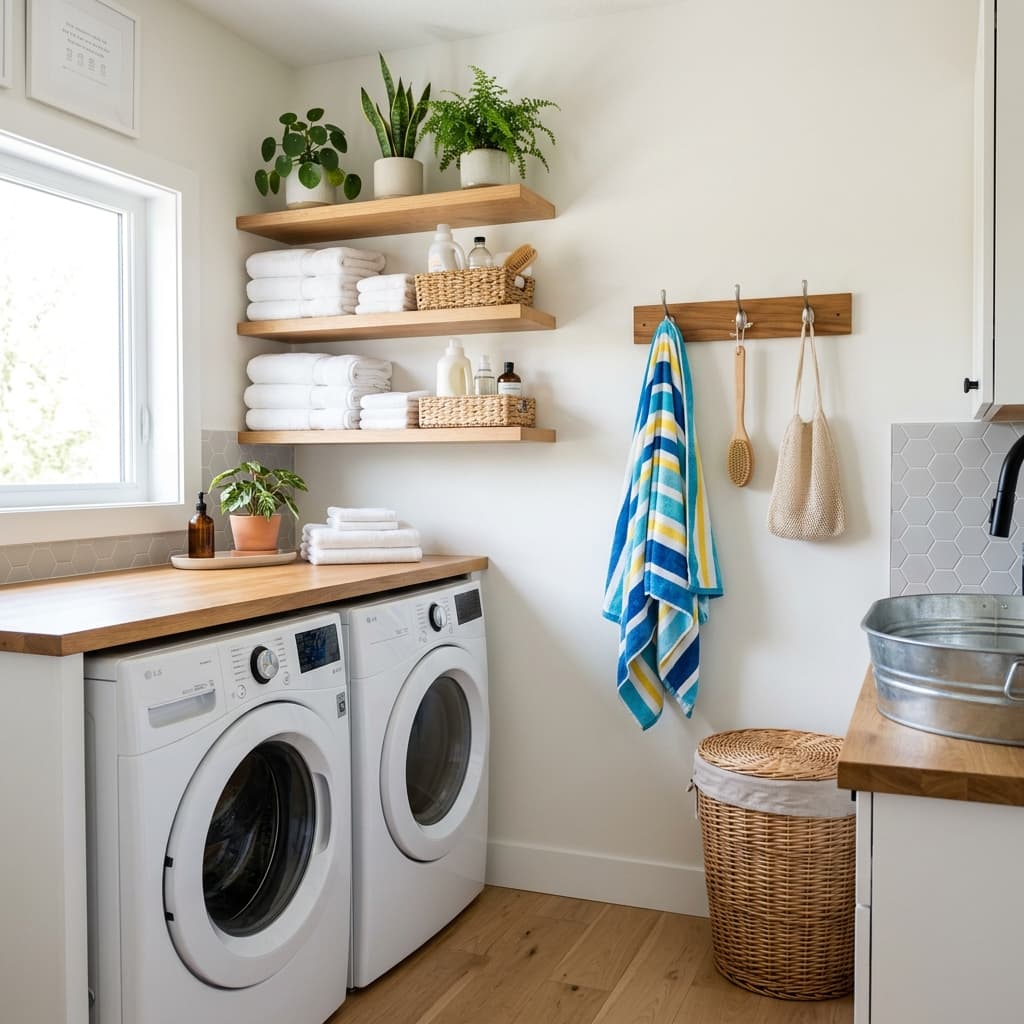
Wet towels piled on top of the dryer. Damp bathing suits in a corner. A basket of dirty clothes that somehow never makes it into the washer. The whole room smells faintly sour even though you just ran a load yesterday.
Summer turns the laundry room into one of the most frustrating spaces in the house. Humidity slows drying, towels multiply, and the usual systems fall apart. You clean it up, and two days later it’s a mess again.
You don’t need custom cabinets or a big budget. A practical summer laundry room organization system built around wet-towel drop zones and simple zones costs less than $25 and actually holds up through heat and humidity. I’ve helped families set this up in everything from tiny closet laundry spaces to larger utility rooms. The ones who keep it simple are the ones who still like their laundry room in August.
For layout ideas beyond the wet-towel zone, see laundry room ideas that make laundry easier. If musty fabric is also showing up in closets, use the 10-minute humidity closet reset.
Why Laundry Rooms Fall Apart in Summer
Humidity is the main troublemaker. Wet towels and clothes don’t dry as fast, so they sit longer and start to smell. Beach bags, pool towels, and sweaty workout clothes get dropped wherever there’s space. The dryer becomes a catch-all surface. Before long the floor disappears under baskets and the room feels permanently damp.
Most organization advice ignores this seasonal reality. Pretty matching baskets look nice in photos but fail when everything is wet and sandy. The system has to handle moisture first and looks second.
The Under-$25 Summer Laundry System
Here’s the exact setup. You can put it together in one short trip to a dollar store, Walmart, or Target—or by repurposing what you already own.
1. The Wet Towel Drop Zone (Most Important Piece)
Wet towels need a place that isn’t the floor, the dryer top, or a bedroom chair.
Best low-cost options:
- Over-the-door towel rack or multi-hook rack ($6–$10)
- Wall-mounted hooks rated for damp areas
- A freestanding towel stand if you have floor space
- A large mesh laundry bag hanging from a hook for very wet items
Place the hooks or rack as close to the entrance of the laundry room (or bathroom if that’s where towels land first) as possible. The rule is simple: wet towels hang here immediately. No exceptions.
This single wet towel storage system prevents most of the mildew smell and floor clutter.
2. The “Damp Things” Bin
Bathing suits, wet washcloths, and damp gym clothes need a temporary holding spot that breathes.
Use a plastic or mesh bin with holes, or a collapsible laundry basket that allows airflow ($5–$8). Label it “Damp – Wash Soon.” Keep it on the floor or a low shelf so it’s easy to drop things into. Empty it into the washer daily or every other day.
Avoid sealed plastic bins for anything wet—they trap moisture and make the smell worse.
3. Clear Zones for the Rest of the Room
Divide the laundry room into simple zones so things stop migrating:
- Dirty clothes zone: One or two hampers max (sort by lights/darks only if you actually maintain it)
- Clean clothes zone: A basket or short shelf for folded items waiting to go upstairs
- Supply zone: Detergent, stain remover, and dryer sheets in one contained caddy or basket
- Drop zone: The wet towel hooks and damp bin already covered
Keeping supplies in one caddy makes surfaces easier to wipe and stops bottles from multiplying across the room.
4. Humidity Control on a Budget
Summer humidity makes everything smell faster.
Cheap and effective options:
- Open box of baking soda on a shelf (replace monthly)
- Moisture-absorbing tub or charcoal bag ($4–$7)
- Small jar of white vinegar left open in a corner (surprisingly effective for odors)
- Run the exhaust fan or crack a window while the dryer is going if possible
These create a basic humidity proof laundry room without buying a special appliance.
Realistic $25 Shopping List
Here’s a typical total:
- Over-the-door or wall hooks: $8 — View product details on Amazon
- Mesh or plastic damp bin: $6 — View product details on Amazon
- Supply caddy: $5
- Moisture absorber or extra baking soda: $4
- Optional small trash can or lint bin: $3
Total usually lands between $18 and $25. If you already own hooks or baskets, you can do it for almost nothing.
How to Set It Up in Different Laundry Spaces
Closet laundry room:
Use over-the-door hooks on the closet door itself. Keep one slim hamper and the damp bin on the floor. Mount a small shelf or use a tension rod for supplies if wall space is limited.
Larger utility room:
Add a freestanding towel rack or more hooks. Use two hampers if you sort, and give the damp bin its own obvious spot near the washer.
Shared bathroom/laundry area:
Put the wet towel hooks in the bathroom and the damp bin near the washer. The key is that wet items never travel far.
The Daily and Weekly Habits That Keep It Working
Daily:
- Hang wet towels immediately
- Toss damp clothes into the mesh bin
- Start a load if the bin is full
Every 2–3 days:
- Empty the damp bin into the washer
- Wipe the top of the washer and dryer
- Check the moisture absorber
Weekly:
- Quick sweep or vacuum
- Wipe handles and switches
- Take clean clothes out of the laundry room so the “clean” basket doesn’t overflow
This light laundry room reset rhythm is what prevents the slow slide back into chaos.
Common Mistakes That Ruin Summer Laundry Systems
- Letting wet towels sit in a pile “just for an hour”
- Using sealed containers for anything damp
- Having more than two dirty-clothes hampers (they just become extra clutter)
- Storing clean clothes in the laundry room for days
- Ignoring the smell until it’s strong
Keep the rules few and obvious. Systems that require perfect behavior fail in real family life.
This setup won’t make your laundry room look like a magazine. It will make it usable, less smelly, and far less cluttered through the most humid months of the year.
FAQ: Summer Laundry Room Organization
How do I stop wet towels from smelling in humidity?
Hang them immediately on hooks with good airflow and wash them within a day or two. Never leave them in a pile. A mesh bag or open hooks are far better than a closed bin for wet towels.
What is the best wet towel storage system for small spaces?
Over-the-door hooks or a narrow wall-mounted rack. They take almost no floor space and keep towels off every other surface. This is the heart of an effective summer towel drop zone.
Can I really organize a laundry room for under $25?
Yes. Hooks, one or two bins, a caddy, and a moisture absorber are enough for most homes. The system matters more than matching expensive products.
How often should I clean the laundry room in summer?
A full wipe-down every 1–2 weeks is plenty if you do the quick daily and every-other-day habits. Humidity makes spills and smells worse, so light frequency beats rare deep cleans.
What should I do with sandy beach towels?
Shake them outside first, then hang them in the wet towel zone. Wash them sooner rather than later—sand and salt make the mildew smell develop faster.
My laundry room has no windows or exhaust fan. What helps?
Keep the door open when possible, use moisture absorbers, and avoid leaving wet items sitting. A small clip-on fan aimed at the hanging towels can also help air circulate.
Related Guides & Reading
- 10-Minute Humidity Closet Reset (Stop Musty Mold)
- Laundry Room Ideas to Make Laundry Easier
- Summer Entryway Organization: Command Center
- Why Is My House So Humid in Summer? 7 Fixes That Work
- 15-Minute Sticky Floor & Musty Smell Summer Reset
- Ceiling Fan Direction + AC Filter Hack for Cooler Home
Wet towels and summer humidity don’t have to take over your laundry room. A few hooks, a breathable bin, and clear zones are enough to stop the daily clutter and keep the sour smell from settling in.
Spend the $20–$25, set it up once, and use the simple daily rules. You’ll notice the difference the first time everyone comes home from the pool and knows exactly where the towels go.
What’s the biggest laundry-room frustration in your house right now—wet towels, the smell, or the constant piles? Tell me in the comments so I can help you adjust the system. You’ve got this.
Related Posts
More in Home Organization →
Door Frames, Knobs & Handles Full Reset
Sticky door knobs and scuffed frames looking dull? This door frames and handles reset uses a natural wipe or melamine sponge without damage.

Under-Furniture Dust Reset for Cleaner Rooms
Dust under furniture making rooms feel smaller? This under-furniture dust reset clears the mess without moving heavy pieces so spaces look bigger.
Washing Machine Deep Clean for Musty Smells
Musty smells ruining your laundry? This washing machine deep clean removes buildup, cleans the gasket, and stops odors with a tablet or natural method.