Pet Hair Removal with Dryer Sheets (No Vacuum Needed)
Pet hair covering your furniture and carpets? This simple dryer sheet method lifts fur fast without a vacuum—perfect for quick cleanups between deeper sessions.
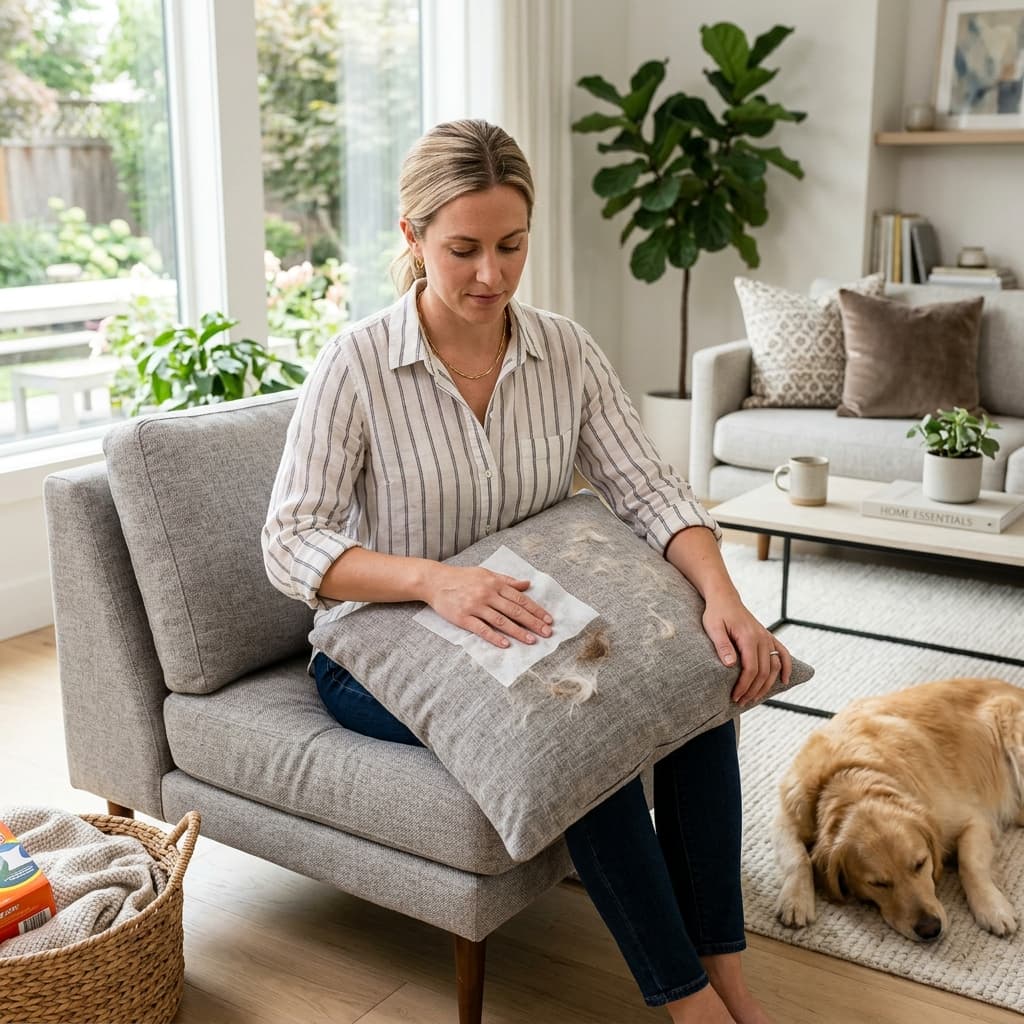
You sit down on the couch and stand up covered in fur. The carpet in the living room has a visible haze of pet hair even though you just cleaned it a few days ago. Reaching for the vacuum feels like overkill for a quick refresh, yet the hair keeps clinging.
Pet hair is one of those constant battles that never fully ends. Dryer sheets offer a surprisingly useful, low-effort option for lifting surface hair from furniture and some carpet areas without dragging out the vacuum. The anti-static coating helps release the fur so it gathers on the sheet instead of staying stuck to the fabric. It’s not a complete replacement for thorough cleaning, but it works well for quick touch-ups and lighter buildup.
Here’s how to use dryer sheets effectively, where they fall short, and how to get better results without special tools.
Why Pet Hair Clings So Stubbornly
Pet hair carries a natural static charge that makes it stick to upholstery, carpets, and clothing. Dry indoor air (common with air conditioning in summer or heating in winter) increases static, so hair holds on tighter. Fabrics with texture—microfiber, velvet, certain synthetics—trap hair even more.
A vacuum is still the most thorough tool, but it’s not always practical for a five-minute cleanup before guests arrive or at the end of the day. That’s where dryer sheets come in handy.
How the Dryer Sheet Method Works
Dryer sheets are coated with ingredients that reduce static electricity. When you rub one over a surface, it helps neutralize the charge holding the hair in place. The hair loosens and often transfers to the sheet itself. Used dryer sheets still work, though fresh ones tend to pick up more.
The method is cheapest and fastest on furniture. On carpets it helps with surface hair but won’t pull deeply embedded fur from the pile.
Step-by-Step: Furniture (Couches, Chairs, Cushions)
-
Choose your sheet. Unscented is better if anyone in the house is sensitive to fragrance or if pets might chew on discarded sheets. Pet-specific dryer sheets exist, but regular ones work for this purpose.
-
Work in sections. Start with one cushion or armrest. Rub the dryer sheet firmly across the fabric in long strokes, following the direction of the weave when possible. Use shorter strokes or light circular motions on heavily covered spots.
-
Refold often. As the sheet collects hair, fold it to a clean side. When all sides are loaded, switch to a new sheet.
-
Pay attention to seams and crevices. Pinch the sheet or use a folded edge to get into button tufts, piping, and gaps between cushions. Hair loves these spots.
-
Finish and dispose. Gather the loose hair that didn’t stick to the sheet and throw everything away. Keep used sheets out of reach of pets—they can be harmful if ingested.
A typical three-seat sofa with moderate hair takes 5–10 minutes this way.
Using Dryer Sheets on Carpets and Rugs
Dryer sheets are less powerful on carpet because hair sinks into the fibers. Still useful for a surface refresh:
- Rub the sheet over high-traffic or visible areas in overlapping strokes.
- Focus on spots where pets sleep or shed the most.
- Follow with a damp rubber glove or microfiber cloth to gather the loosened hair into clumps you can pick up by hand.
For thicker carpet, this works best as a quick pass rather than a deep clean. It won’t replace vacuuming, but it can make the room look noticeably better in a few minutes.
What Most People Get Wrong
Expecting dryer sheets to remove every last hair is the main mistake. They excel at surface and lightly embedded fur. Heavy, matted buildup needs a vacuum, rubber gloves, or a lint roller for better results.
Using heavily scented sheets near pets or on items pets sleep on can cause irritation. Residue from dryer sheets can also feel slightly coated on some fabrics if you use too many or press too hard. A used sheet or a lightly dampened one (wrung out well) sometimes reduces that effect.
Another common error is rubbing randomly. Working systematically in one direction and refolding the sheet keeps the process efficient instead of just moving hair around.
Stronger No-Vacuum Combos
When the dryer sheet alone isn’t enough, pair it with these simple tools:
- Slightly damp rubber gloves: Put on a pair of dish gloves, dampen them lightly, and wipe the furniture. Hair clumps on the rubber and lifts easily. Rinse the gloves as they fill up.
- Microfiber cloth: Slightly damp or dry, rubbed firmly, grabs a lot of hair.
- Lint roller: Excellent for final touch-ups or smaller areas after the dryer sheet has loosened the fur.
- Squeegee or rubber broom: On low-pile carpet or larger fabric areas, a rubber edge pulls hair into piles.
These combinations stay vacuum-free and still deliver solid results for day-to-day maintenance.
Tips for Better Results and Less Hair Overall
- Groom your pet regularly. Less loose hair in the coat means less hair on the furniture.
- Wash removable cushion covers and throws. Tossing them in the dryer on air-fluff with a dryer sheet for 10 minutes before washing helps loosen embedded hair into the lint trap.
- Keep a stash of dryer sheets and rubber gloves near the main pet areas so cleanup stays easy.
- In dry weather, static is higher and hair clings more. A quick dryer-sheet pass becomes more useful.
- Test a small hidden area first on delicate or dark fabrics if you’re worried about residue or scent transfer.
Realistic Expectations
Dryer sheets give a fast visual improvement and reduce the amount of hair that transfers to your clothes. They are excellent for maintenance between deeper cleans. For heavily shed seasons or multi-pet homes, you’ll still want periodic vacuuming or the rubber-glove method for a more complete job. Used consistently, though, the dryer-sheet approach keeps the problem from getting overwhelming.
FAQ: Pet Hair Removal with Dryer Sheets
Do dryer sheets really remove pet hair from furniture?
Yes, for surface and lightly stuck hair. The anti-static properties help loosen fur so it lifts onto the sheet or becomes easier to gather. Results are best on upholstery; heavier carpet buildup needs additional methods.
Can I use dryer sheets on carpet?
They help with surface hair. Rub firmly, then collect the loosened fur with a damp rubber glove or microfiber cloth. They won't extract hair deep in the pile the way a vacuum does.
Are scented dryer sheets safe around pets?
Unscented is safer. Many pets are sensitive to fragrances, and discarded sheets can be dangerous if chewed or swallowed. Store them out of reach and choose fragrance-free when possible.
How often should I do this?
A quick pass every few days on favorite pet spots keeps hair from building up. Do a more thorough session weekly or whenever the furniture starts looking fuzzy.
What works better than dryer sheets for heavy pet hair?
Slightly damp rubber gloves are often more effective for large areas of furniture. A vacuum with an upholstery tool remains the strongest overall method when you have the time.
Will dryer sheets leave residue on my couch?
They can leave a light coating, especially if used heavily on dry fabric. Using a used sheet, wiping lightly, or following with a clean microfiber cloth minimizes this. Test first on a hidden spot if concerned.
Related Articles
- Weekend Living Room Summer Reset
- High-Touch Surfaces Weekly Cleaning Reset
- Baseboards & Floor Edges Reset
Pet hair doesn’t have to mean dragging out the vacuum every single time. A dryer sheet rubbed firmly over furniture (and lightly over carpet) lifts a surprising amount of fur in just a few minutes and requires almost no setup.
Keep a box of unscented sheets handy and try the method on the worst cushion or chair today. You’ll see the difference quickly, and the next full vacuum session will go faster.
How bad is the pet hair situation in your house right now—manageable or full takeover? Tell me in the comments what works best for your pets and furniture. You’ve got this.
Related Posts
More in Home Organization →
Door Frames, Knobs & Handles Full Reset
Sticky door knobs and scuffed frames looking dull? This door frames and handles reset uses a natural wipe or melamine sponge without damage.

Under-Furniture Dust Reset for Cleaner Rooms
Dust under furniture making rooms feel smaller? This under-furniture dust reset clears the mess without moving heavy pieces so spaces look bigger.
Washing Machine Deep Clean for Musty Smells
Musty smells ruining your laundry? This washing machine deep clean removes buildup, cleans the gasket, and stops odors with a tablet or natural method.