Kitchen Junk Drawer Organization (Under $10)
Tired of the chaotic kitchen junk drawer? This kitchen junk drawer organization system costs under $10 and stops daily clutter from building back up fast.
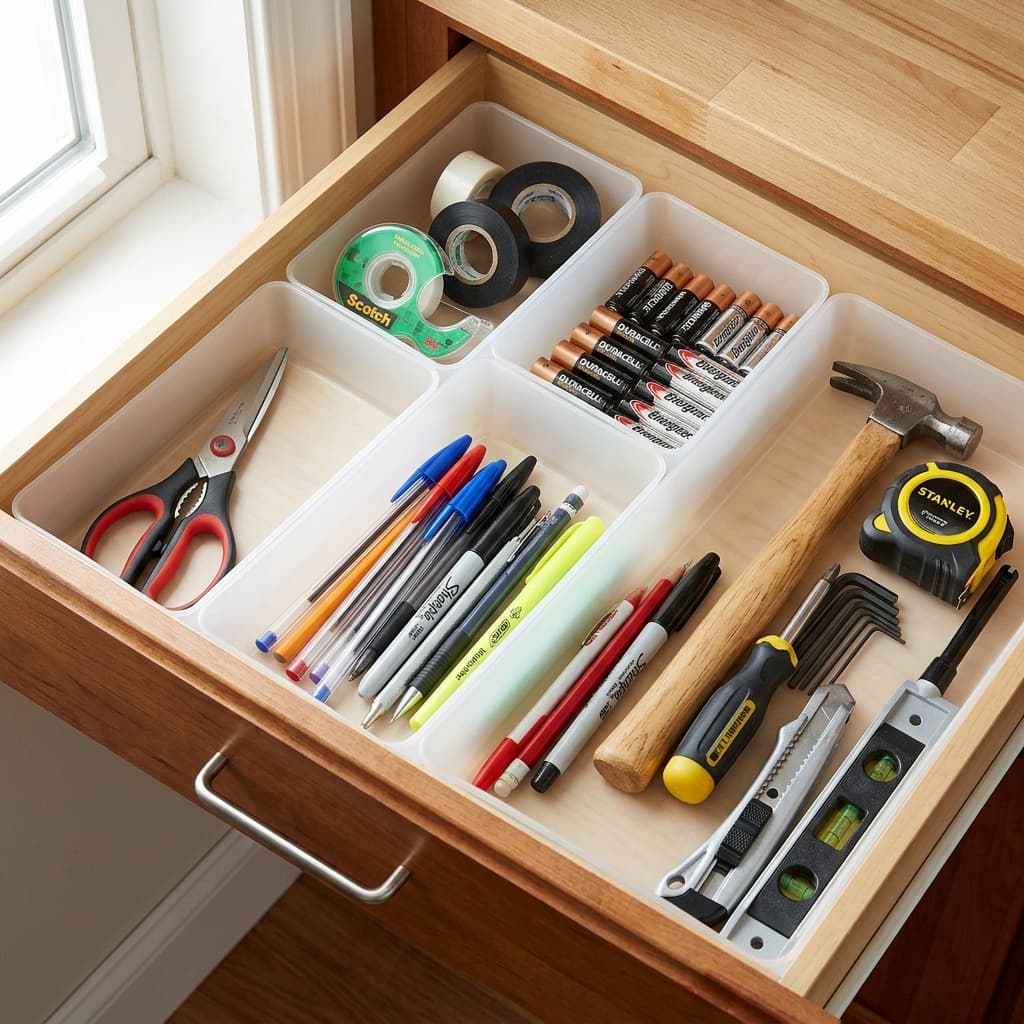
You open the junk drawer looking for a pen or a pair of scissors and suddenly you’re digging through batteries, takeout menus, loose change, expired coupons, random screws, and three different tape measures. Five minutes later you’ve still not found what you needed, and the drawer looks worse than when you started.
Almost every kitchen has one. It starts as a handy spot for small necessities and slowly becomes a black hole. The mess creates daily friction—small delays and low-level annoyance that add up.
You don’t need a full kitchen remodel or expensive custom organizers. A practical kitchen junk drawer organization system can be built for under $10 and, more importantly, designed so the clutter doesn’t immediately return. I’ve reset dozens of these drawers over the years. The ones that stay usable follow the same simple principles.
For other quick kitchen resets, check out our under-sink kitchen organization guide or our kitchen sink & countertop reset.
Why Junk Drawers Get Out of Control So Fast
The drawer is convenient. Anything without an obvious home gets dropped in “just for now.” Over time those temporary items become permanent residents. Without clear boundaries, categories mix, small objects migrate to the back, and the front becomes a jumbled layer you have to dig through.
Most people eventually dump everything out, feel overwhelmed, and shove it all back in. That approach never lasts. The fix is creating a few clear zones and limiting what is allowed to live there permanently.
The Under-$10 Junk Drawer System

You can do this with items from a dollar store, Target’s dollar spot, or things you already own.
What Works Well
- Small plastic or silicone trays and bins
- Adjustable or expandable drawer dividers
- A shallow tray or small basket for the “daily grab” items
- A tiny container or magnetic dish for loose change and batteries
- Optional: a small notepad and pen that stay in the drawer
Total cost usually lands between $6 and $10 if you’re starting from scratch.
Step 1: Empty and Sort (The Hardest Part)
Take everything out. Wipe the drawer with a damp cloth. Then sort into four groups:
- Keep in this drawer (true everyday tools)
- Relocate (items that belong in the tool box, office, or another kitchen drawer)
- Toss or recycle (expired coupons, dried-up pens, random broken bits)
- Donate or give away
Be honest. Most junk drawers contain far more “maybe someday” items than actual necessities.
Step 2: Decide What Actually Belongs
A functional junk drawer should hold only high-use, small items that don’t have a better home. Typical keepers:
- Scissors
- Tape
- Pens and a small notepad
- Binder clips or paper clips
- Rubber bands
- A small flashlight or lighter
- Batteries (in a contained box)
- Rarely: a measuring tape, small screwdriver, or spare keys
Everything else needs a different permanent home. This decision is what makes the junk drawer reset stick.
Step 3: Create Simple Zones
Once you’ve edited, give the remaining items clear homes inside the drawer.
- Front zone: Daily grab items (scissors, pens, tape)
- Middle zone: Small accessories (clips, rubber bands, batteries)
- Back zone: Less frequent tools
Use small bins or adjustable dividers to create these sections. The goal is that you can open the drawer and see categories at a glance instead of a single mixed pile. This is the core of effective simple drawer dividers use.
Step 4: Contain the Worst Offenders
Loose batteries, coins, and tiny hardware are usually the biggest mess-makers. Give them their own small containers so they can’t roll around and create chaos. A cheap ice cube tray, small craft boxes, or even a repurposed mint tin works.
How to Keep It from Turning Back Into a Junk Drawer
The system only works if you protect the boundaries.
- One-in rule: If something new goes into the drawer, something else should leave or the new item needs a real category.
- Weekly 60-second tidy: Once a week, open the drawer and return anything that doesn’t belong. It takes less than a minute and prevents the slow slide.
- No “temporary” storage: The moment you catch yourself thinking “I’ll just put it here for now,” stop and find its actual home.
These habits are what separate a permanent solution from a temporary clean-out.
Realistic Product Ideas Under $10
- Pack of small plastic drawer organizers: $4–$7
- Adjustable bamboo or plastic dividers: $5–$8
- Dollar-store bins and trays: $1–$3 each
- Small clear boxes for batteries: $2–$3
You rarely need more than two or three pieces. Measure your drawer first so nothing is too tall or too wide.
Special Situations
- Very deep drawers: Use stacked shallow bins or a single long divider system so items don’t get buried.
- Shallow drawers: Stick to low-profile trays and avoid anything with high sides.
- Shared households: Label the zones lightly with a piece of tape if multiple people use the drawer. Clear categories reduce the “I’ll just toss it in” behavior.
Common Mistakes That Bring the Clutter Back
- Keeping too many “just in case” items
- Using one big open space with no dividers
- Allowing mail, receipts, and random papers to land there
- Buying organizers before editing what you own
- Expecting the drawer to hold tools that belong in a toolbox or utility closet
Edit first, contain second, maintain lightly. That order matters more than the specific products.
A calm junk drawer removes a small daily frustration that most of us have simply accepted. When you can open it and immediately see the scissors or tape, the whole kitchen feels a little more under control.
FAQ: Kitchen Junk Drawer Organization Questions
What should actually go in a kitchen junk drawer?
Only small, high-use items that don’t have a better home—scissors, tape, pens, clips, batteries, and similar everyday tools. Everything else creates the clutter that makes the drawer unusable.
How do I organize a junk drawer on a tight budget?
Empty it, edit hard, then use dollar-store bins or small containers you already own to create zones. You can build a functional system for well under $10. The editing step matters more than the products.
How often should I reset the junk drawer?
A full reset every 3–6 months works for most people. A quick 60-second tidy once a week prevents the need for frequent major clean-outs and stops the kitchen drawer clutter from returning.
What are the best cheap drawer organizers?
Simple plastic or silicone trays, adjustable dividers, and small clear boxes. Avoid anything too tall or complicated. Measure your drawer depth and height before buying.
How do I stop other people in the house from messing it up?
Make the categories obvious. When everything has a clear home, it’s easier for others to put things back correctly. A quick weekly reset also corrects the small drifts before they become big messes.
Should I get rid of the junk drawer completely?
Not necessarily. A well-edited version is useful. The problem isn’t the concept—it’s the lack of boundaries. A contained, limited junk drawer can still serve a purpose without becoming a black hole.
Related Guides
- Under-Sink Kitchen Organization Guide
- Kitchen Sink Countertop Reset
- 15-Minute Kitchen Cabinet Fronts Clean
- 10-Minute Summer House Reset Clean
The kitchen junk drawer doesn’t have to be a source of daily irritation. Empty it once, keep only what you truly use, give those items clear zones with a few cheap dividers, and protect the boundaries with a quick weekly tidy.
Spend the $8–$10 and the 20–30 minutes. The next time you need scissors or tape, you’ll find them in seconds instead of digging.
What’s the weirdest thing you’ve found in your junk drawer lately? Tell me in the comments—I always enjoy hearing what turns up. You’ve got this.
Related Posts
More in Kitchen & Dining →
How to Clean Refrigerator Door Seals (Stop Mold & Sticky Residue)
Sticky fridge door seals or mold in the folds? Clean refrigerator door gaskets in 15 minutes: remove residue, cut mold risk, and restore a tight seal.
Stovetop Grease Reset with Baking Soda & Vinegar
Sticky summer grease on your stovetop? This baking soda and vinegar method loosens residue with almost no heavy scrubbing so your stove looks clean again fast.
Garbage Disposal Refresh with Ice, Salt & Citrus
Summer heat making your garbage disposal smell? This ice, salt, and citrus refresh stops odors and cleans the blades in minutes without harsh chemicals.